The Federal Reserve concluded its series of rate cuts in December 2025 with a 25 basis point reduction, bringing the federal funds rate to a range of 3.50% to 3.75%. This represents the third consecutive rate cut following reductions in September and October 2025, totaling 1.75 percentage points in cuts since the peak rates established in 2023-2024.
IMPORTANT DISCLAIMER: The information provided in this analysis is for educational purposes only and does not constitute investment advice. Federal employees must conduct their own research and consult with qualified financial professionals before making any investment decisions regarding their TSP accounts.
Understanding the Current Rate Environment
The Federal Reserve’s recent monetary policy adjustments have created significant implications for Thrift Savings Plan participants. The December 2025 rate cut marked a cautious approach by the Federal Reserve, with limited consensus regarding the trajectory of future rate adjustments in 2026.
It is essential to understand that Federal Reserve rate changes do not uniformly impact all TSP fund options. Each fund category responds differently based on its underlying investment composition and market exposure characteristics.

G Fund Impact Analysis
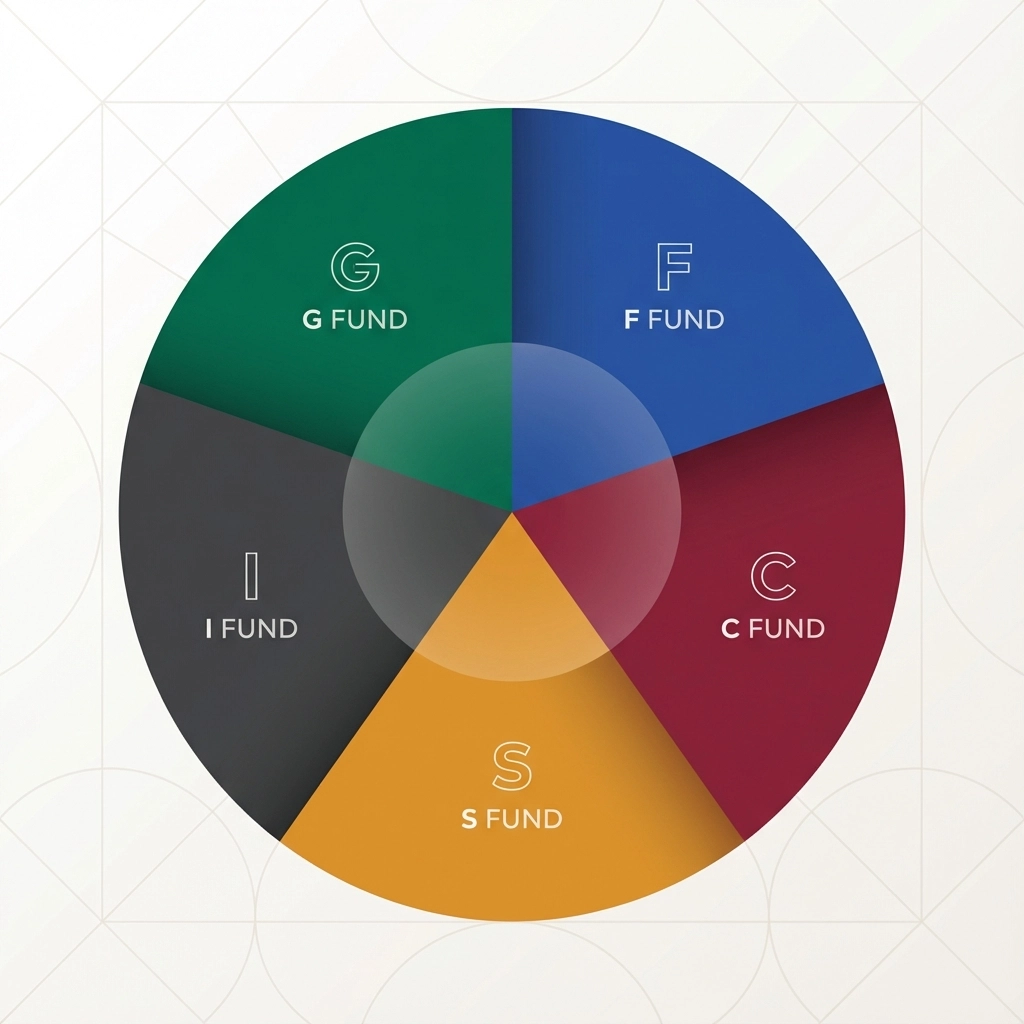
The Government Securities Investment Fund (G Fund) experiences the most direct correlation with Federal Reserve rate adjustments. This fund invests exclusively in short-term U.S. Treasury securities, making it particularly sensitive to changes in the federal funds rate.
Current Impact on G Fund Performance:
- As the Federal Reserve reduces short-term interest rates, the G Fund’s yield decreases correspondingly
- The G Fund’s return mechanism is directly tied to the average interest rate on long-term government bonds
- Federal employees should expect continued pressure on G Fund returns as rates remain at current levels
WARNING: G Fund participants should be aware that continued low interest rate environments typically result in reduced returns for government securities investments. This may impact retirement savings growth rates for conservative investors.
F Fund Response to Rate Cuts
The Fixed Income Index Investment Fund (F Fund) tracks the performance of the Bloomberg Barclays U.S. Aggregate Bond Index. Rate cuts generally produce favorable conditions for existing bond holdings in the near term.
F Fund Performance Considerations:
- Existing bonds within the fund become more valuable when interest rates decline
- The inverse relationship between interest rates and bond prices has supported F Fund valuations throughout 2025
- Duration risk remains a significant factor for F Fund participants to consider
COMPLIANCE NOTICE: Bond fund investments carry inherent risks including interest rate risk, credit risk, and inflation risk. Federal employees must evaluate their risk tolerance independently before allocating funds to the F Fund.
Equity Fund Analysis: C Fund, S Fund, and I Fund
Stock-based TSP funds typically benefit from rate-cutting environments through multiple transmission mechanisms. Lower interest rates reduce corporate borrowing costs and make equity investments more attractive relative to fixed-income alternatives.
C Fund (Common Stock Index Investment Fund)
The C Fund tracks the S&P 500 Index and represents large-capitalization U.S. stock market performance. Rate cuts generally support C Fund performance through:
- Reduced corporate financing costs
- Increased relative attractiveness compared to bonds
- Potential for increased consumer spending and economic activity
S Fund (Small Capitalization Stock Index Investment Fund)
The S Fund focuses on small to medium-sized U.S. companies and typically demonstrates heightened sensitivity to interest rate changes compared to large-cap funds.
I Fund (International Stock Index Investment Fund)
The I Fund’s performance depends on international market conditions and currency exchange rates in addition to U.S. monetary policy impacts.
RISK DISCLOSURE: Equity funds carry substantial market risk, including the potential for significant losses. Past performance does not guarantee future results. Federal employees must assess their individual risk tolerance and investment timeline before making allocation decisions.

Lifecycle Fund Implications
The TSP Lifecycle Funds (L Funds) automatically adjust their asset allocation based on target retirement dates. The impact of Fed rate cuts on L Funds depends on their specific asset allocation percentages across the five core funds.
L Fund Considerations:
- L Funds with longer time horizons maintain higher equity allocations and may benefit more from rate cut environments
- Near-retirement L Funds with higher G Fund and F Fund allocations experience different impacts
- Automatic rebalancing occurs regardless of market conditions
IMPORTANT: L Fund participants should regularly review their selected fund’s current allocation and ensure it aligns with their retirement timeline and risk preferences.
Economic Context and Future Projections
The Federal Reserve’s cautious stance regarding future rate adjustments creates uncertainty for TSP participants planning long-term investment strategies. Economic indicators suggest the Fed may pause further rate cuts in 2026, potentially stabilizing current interest rate levels.
Key Economic Factors to Monitor:
- Inflation trends and Federal Reserve target achievement
- Employment data and economic growth indicators
- Geopolitical events affecting market stability
- Congressional fiscal policy decisions impacting federal employee benefits
Risk Assessment and Portfolio Considerations
Federal employees must understand that monetary policy represents only one factor influencing TSP fund performance. Market volatility, economic conditions, and global events continue to impact investment returns regardless of Federal Reserve actions.
MANDATORY RISK DISCLOSURE: All TSP investments carry risk of loss. No investment strategy can guarantee positive returns or protect against market downturns. Federal employees bear full responsibility for their TSP allocation decisions.
Conservative Allocation Strategies
Federal employees approaching retirement or maintaining low risk tolerance should consider the following factors:
- G Fund returns will remain pressured in low-rate environments
- F Fund duration risk increases with longer-term bond holdings
- Diversification across multiple fund types may reduce overall portfolio volatility
Moderate to Aggressive Allocation Approaches
Younger federal employees with longer investment timeframes may benefit from:
- Higher equity allocations to capitalize on potential rate cut benefits
- Regular contribution increases to dollar-cost average through market cycles
- Periodic rebalancing to maintain target allocations
Action Items for Federal Employees
IMMEDIATE STEPS TO CONSIDER:
- Review Current TSP Allocation: Log into your TSP account and examine your current fund allocation percentages
- Assess Risk Tolerance: Evaluate whether your current allocation aligns with your risk capacity and retirement timeline
- Monitor Fund Performance: Regularly review monthly TSP fund performance reports
- Consider Professional Consultation: Schedule meetings with qualified financial advisors familiar with federal benefits
DO YOUR OWN RESEARCH: Federal employees must independently verify all investment information and conduct thorough analysis before making any changes to their TSP allocations.
Compliance and Legal Disclaimers
NO INVESTMENT ADVICE DISCLAIMER: This analysis does not constitute personalized investment advice or recommendations for specific TSP allocation strategies. Federal Benefits Service does not provide investment advisory services and cannot guarantee the accuracy of market projections or fund performance predictions.
LIMITATION OF LIABILITY: Federal Benefits Service assumes no responsibility for investment losses resulting from decisions made based on this educational content. All TSP participants must accept full responsibility for their investment choices and outcomes.
PROFESSIONAL GUIDANCE RECOMMENDATION: Federal employees should consult with qualified, independent financial advisors before making significant changes to their TSP allocations. Professional guidance becomes particularly important during periods of monetary policy transitions.
Conclusion and Next Steps
The Federal Reserve’s recent rate cuts have created differentiated impacts across TSP fund categories. While some funds may benefit from the current rate environment, others face continued pressure from low interest rate conditions.
Federal employees must maintain vigilant oversight of their TSP accounts and ensure their allocation strategies remain appropriate for their individual circumstances. The uncertainty regarding future Federal Reserve policy decisions reinforces the importance of diversified investment approaches and regular portfolio reviews.
FINAL COMPLIANCE NOTICE: This educational content is provided for informational purposes only. Federal employees must conduct independent research and seek professional guidance before making any investment decisions. Past performance does not guarantee future results, and all investments carry risk of loss.
For additional resources and federal benefits information, visit Federal Benefits Service or schedule a benefits review consultation to discuss your specific circumstances with qualified professionals.