
IMPORTANT DISCLAIMER: This content is provided for informational purposes only. Federal benefits regulations are complex and subject to change. It is very important to do your own analysis and research. Consult with qualified professionals and official OPM documentation before making any decisions regarding survivor benefits.
Federal employees participating in the Civil Service Retirement System (CSRS) or the Federal Employees Retirement System (FERS) have access to survivor benefit protections designed to provide financial security to eligible family members upon the employee’s death. Understanding these benefits requires careful examination of eligibility requirements, benefit calculations, and procedural compliance.
NO INVESTMENT ADVICE
The information contained herein does not constitute investment advice, legal counsel, or professional financial guidance. All federal employees must conduct independent research and seek qualified professional assistance when evaluating survivor benefit options and their impact on retirement planning.
Types of Survivor Benefits Available
The Office of Personnel Management administers three distinct categories of survivor benefits for federal employees and retirees:
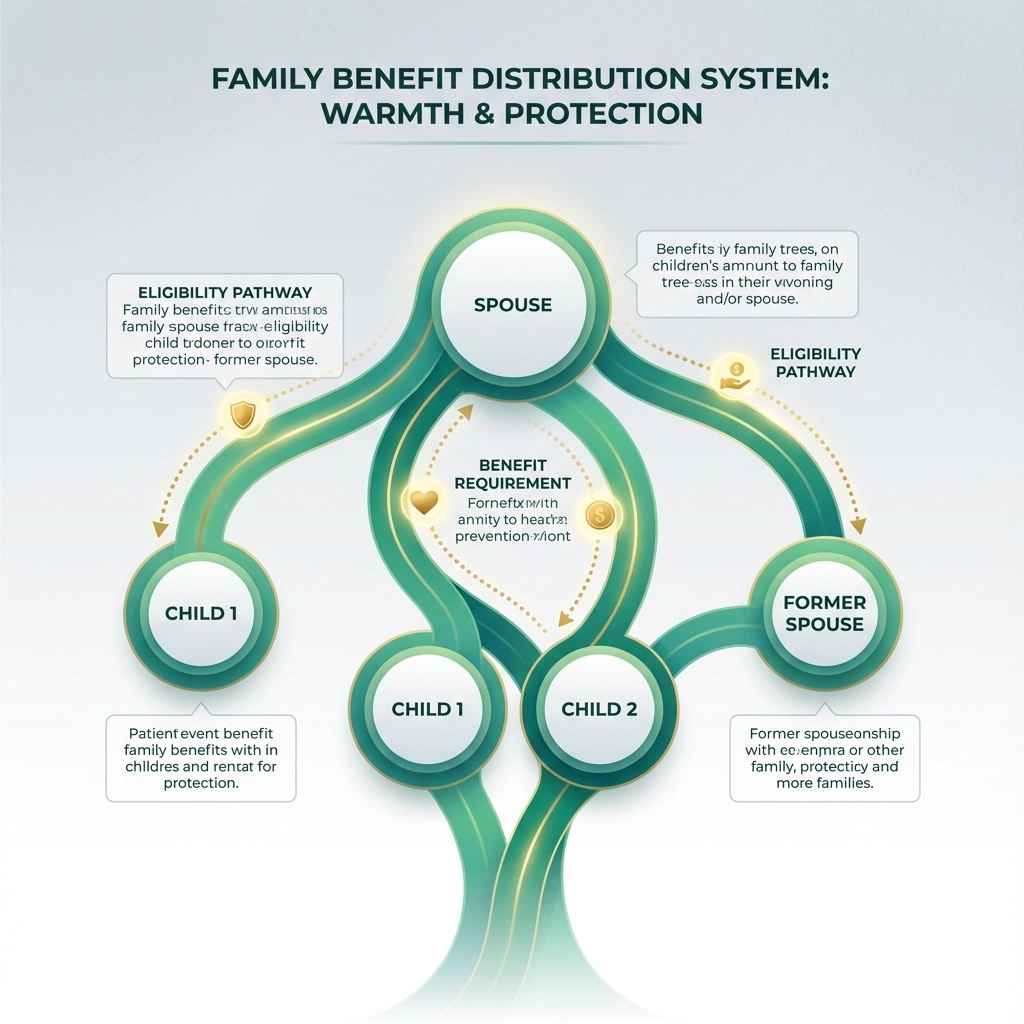
Monthly Survivor Annuity: This benefit provides recurring monthly payments to eligible survivors, including spouses, children, and former spouses when court-ordered provisions exist. Monthly survivor annuities represent the primary ongoing financial protection mechanism for qualifying family members.
Basic Employee Death Benefit (FERS Only): Available exclusively under the Federal Employees Retirement System, this one-time payment equals fifty percent (50%) of the deceased employee’s final salary or average salary, whichever amount is higher, plus $43,800.53 for deaths occurring on or after December 1, 2025.
Lump-Sum Credit: This benefit provides a one-time distribution of remaining retirement contributions held in the Civil Service Retirement and Disability Fund when no survivor annuity applies. Distribution follows a specific legal order of precedence established by federal regulations.

CRITICAL COMPLIANCE NOTICE
All survivor benefit elections and modifications must comply with federal regulations. Employees bear full responsibility for understanding current requirements and ensuring proper documentation. Seek independent professional guidance for specific situations.
Eligibility Requirements and Service Thresholds
FERS Eligibility Standards
Under the Federal Employees Retirement System, surviving spouses qualify for monthly benefits when the deceased employee completed a minimum of ten (10) years of creditable service, with at least eighteen (18) months being civilian service. The marriage must have existed for a minimum of nine (9) months prior to the employee’s death.
Exception Provisions: The nine-month marriage requirement is waived in cases of accidental death or when the deceased employee and surviving spouse had a child together.
CSRS Eligibility Standards
The Civil Service Retirement System requires a minimum of eighteen (18) months of creditable civilian service for spouse eligibility. The identical nine-month marriage requirement applies, with the same exceptions for accidental death or when a child exists from the marriage.
Former Spouse Qualifications
Former spouses may receive survivor benefits when a qualifying court order awards such benefits and specific conditions are met:
- The former spouse must have been married to the deceased at the time of separation from federal service
- Coverage under the Federal Employees Health Benefits plan during the eighteen (18) months preceding marriage termination is required
- The former spouse must not have remarried before age fifty-five (55)
Dependent Children Eligibility
Unmarried dependent children qualify for benefits under the following circumstances:
- Children up to age eighteen (18)
- Children ages eighteen (18) to twenty-two (22) attending accredited educational institutions full-time
- Unmarried, disabled dependent children over age eighteen (18) with disabilities certified by the Social Security Administration, provided the disability occurred before age eighteen (18)
WARNING: COMPLIANCE RESPONSIBILITY
Federal employees are solely responsible for ensuring their survivor benefit elections comply with all applicable regulations. This information does not replace official OPM guidance or professional consultation.
Benefit Calculation and Maximum Payments
CSRS Maximum Survivor Benefits
Under the Civil Service Retirement System, the maximum survivor benefit equals fifty-five percent (55%) of the deceased employee’s unreduced annual benefit amount.
FERS Maximum Survivor Benefits
The Federal Employees Retirement System provides a maximum survivor benefit of fifty percent (50%) of the deceased employee’s unreduced annual benefit amount.
Reduction Elections During Employment
Federal employees may elect the percentage of their retirement benefit designated for survivor protection during retirement. This election directly impacts the reduction applied to the employee’s annuity during their lifetime, creating a balance between retirement income and family protection.
IMPORTANT: NO LIABILITY FOR DECISIONS
Federal Benefits Service assumes no responsibility for benefit election decisions or their consequences. All federal employees must independently verify current regulations and seek professional guidance appropriate to their circumstances.
Post-Death Procedures and Administrative Requirements
Upon the death of a federal employee or retiree, annuity payments cease immediately. The Office of Personnel Management initiates contact with eligible family members by sending required survivor benefit application forms.
Qualifying survivors receive a Civil Service Final (CSF) number, which serves as the primary identifier for all future interactions with OPM regarding survivor benefits. This number is essential for benefit administration and must be referenced in all communications.
Benefit Commencement Timing
Survivor annuities typically begin on the date the deceased employee would have qualified for an unreduced annuity. Alternatively, survivors may elect to receive benefits at a reduced rate immediately following the employee’s death.
Multiple Survivor Situations
When both a current spouse and former spouse have valid claims to survivor benefits, the current spouse receives the remainder after the former spouse’s court-ordered portion is distributed.

ADDITIONAL COMPLIANCE CONSIDERATIONS
Workers’ Compensation Coordination
Job-related deaths may qualify for workers’ compensation benefits in addition to survivor annuity payments. Federal employees must understand the interaction between these benefit systems.
Application Time Limits
CRITICAL DEADLINE: Applications for survivor benefits must be filed with the Office of Personnel Management no later than thirty (30) years after the employee’s death. This represents an absolute statutory limitation.
Contact Information for Claims
Survivors should contact OPM at retire@opm.gov for questions regarding survivor benefits or to file claims. All correspondence must include the assigned claim number for proper processing.
FINAL DISCLAIMER AND COMPLIANCE STATEMENT
This information is provided for general educational purposes only and does not constitute professional advice. Federal benefits regulations are complex, frequently updated, and subject to individual circumstances that may affect eligibility and benefit calculations.
DO YOUR OWN RESEARCH: All federal employees must independently research current regulations, consult official OPM publications, and seek qualified professional guidance before making benefit elections or retirement decisions.
NO GUARANTEE OF ACCURACY: While every effort has been made to provide accurate information, regulations change frequently. Federal employees bear sole responsibility for verifying current requirements and ensuring compliance.
PROFESSIONAL CONSULTATION REQUIRED: The complexity of federal survivor benefits requires professional analysis tailored to individual circumstances. Set a meeting with qualified benefits specialists to review your specific situation and ensure appropriate planning.
Federal employees should regularly review their survivor benefit elections and maintain current beneficiary designations to ensure family protection aligns with their intentions and changing life circumstances. Proper planning requires ongoing attention and professional guidance to navigate the complexities of federal benefits administration effectively.